Telegram GroupWelcome to PJC-2Himalaya Class
 https://t.me/+A1aoRA4eGbg2YmI1
We start the formal lessons of the second year of PJC from Makara Sankranti 2023. However before that we have webinars every month to stay in track and address additional topics and case studies.
Webinars Pt.Rath
 Please register for PJC-2 Webinars on Nov 3, 2022 8:30 PM IST and every first Thursday of month at: https://attendee.gotowebinar.com/register/4507255929226307083
After registering, you will receive a confirmation email containing information about joining the webinar.
Webinars Pt.Rath
Please register for PJC-2 Webinars on Nov 3, 2022 8:30 PM IST and every first Thursday of month at: https://attendee.gotowebinar.com/register/4507255929226307083After registering, you will receive a confirmation email containing information about joining the webinar.
Himalaya Class
 Varga Viveka - There are certain rules which are common for all divisional charts and Parāśara summarises them in the chapter Varga Viveka. He starts by emphasising the...
 Varga Concepts - This chapter of Bṛhat Parāśara Horā Śāstra has many concepts used in studying the charts. We examine some of the śloka for understanding the following...
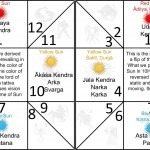 Kendra: The Cross - The word kendra (Sanskrit. केन्द्र) means that which is the center of something like a focus. As explained earlier, the concept of kendra was derived...
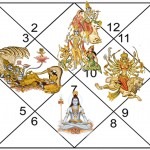 Kṣetra - Etymology The Sanskrit word क्षेत्र (kṣetra) means landed property, land, soil as in kṣetrasya-pati[1] meaning “lord of the land” and can refer to a kind...
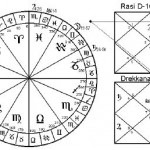 Śloka 5 ½ - Whichever rāśi a particular division is in, the lord of the said division shall be the same as the rāśi it is mapped to. This...
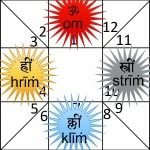 Kendra: Lotus Pond - Introduction The chart is visualized as a pond of water which is the center of life for the city/village. It gives water that sustains life...
 Horā Meaning - Meaning of Horā There can be various meanings of the word horā and it is preposterous to conclude that this word was borrowed from the...
 Parāśara Horā: Half Sign - Half Sign Parāśara Śloka 5 ½ सूर्येन्द्वोर्विषमे राशौ समे तद्विपरीतकम्॥ ५॥ sūryendvorviṣame rāśau same tadviparītakam The Sun and Moon, in that order, [enliven] the odd...
 Rājayoga from Horā - Rule 06: Kalyāṇavermā (Sārāvalī) teaches that rājayoga are initiated by the Sun and sustained by the Moon. By implication it means that planets well placed...
 Introduction - राशित्रिभागाद्रेष्काणास्ते च षट्त्रिंशदीरिताः। परिवृत्तित्रयं तेषां मेषादेः क्रमशो भवेत्॥ ७॥ rāśitribhāgādreṣkāṇāste ca ṣaṭtriṁśadīritāḥ | parivṛttitrayaṁ teṣāṁ meṣādeḥ kramaśo bhavet || 7|| Translation: Dreṣkāṇa (drekkāṇa) is one-third...
 Parāśara Drekkāṇa - Overview This is the first of drekkāṇa charts based on the completion of the circle of the zodiac which is the real meaning of parivṛtti....
 Parivṛtti Drekkāṇa - This is the simplest of the regular drekkāṇa charts and just like the parivṛtti horā, is based on direct count from Aries for the 36...
 Half Zodiac - Parāśara ṣoḍaśavargādhyāyaḥ śloka 6½ राशेरर्द्धं भवेद्धोरा ताश्चतुर्विंशतिः स्मृता। मेषादि तासां होराणां परिवृत्तिद्वयं भवेत्॥ ६॥ rāśerarddhaṁ bhaveddhorā tāścaturviṁśatiḥ smṛtā | meṣādi tāsāṁ horāṇāṁ parivṛttidvayaṁ bhavet ||...
 Kalyāṇavermā - Kalyāṇavermā Sārāvalī | Ch.49 Kalyāṇavermā enumerates the effects and nature of the twenty-four horā for the twelve signs when it is occupied by the Lagna....
 Parivṛtti Horā - Horā I Parivṛtti Horā (Vāyu) This is the simplest of the regular horā charts and is based on direct count from Aries for the 24...
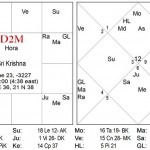 Mihira Horā - Call it Mihira Horā or Mṛtyu Horā, it’s D2M that deals with the māraka power of the 2nd house Horā IA: Mihira Horā Varāhamihira defines...
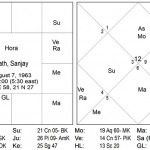 Somanāth Horā - Horā II Somanāth Horā Sun-Moon Factor Previously we have noticed one major shortfall in the Parivṛtti Horā where the method of mapping did not account...
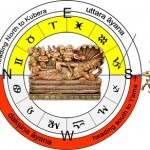 Horā III: Ayana - The Maharṣi observed two solstices’ where the length of the day (i.e. daylight duration) was the longest and shortest respectively called the summer and winter...
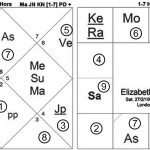 Samasaptaka Horā - For using the Āyana-Horā, we have a special horā chart called समसप्तक samasaptaka literally meaning neutral-seventh where the 7th bhāva is a projection of the...
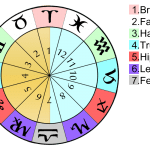 Horā IV Gola - Gola: गोल (gola) refers to sphere or globe as the celestial globe or as the globe of the sun or of the earth in Sūrya...
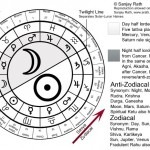 Horā V Guṇa - Guṇa: refers to the nature of signs and planets as of one of the three types – sattva, rajas or tamas. An imaginary line divides...
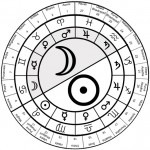 Sammukha Horā - Sammukha Rāśi are based on the South Indian Chart where a line passing through Cn-Le junction and Cp-Aq junction divides the zodiac into two parts....
 Kashinath Hora - Introduction Points listed by my student Sanjay Prabhakaran. These are just some starting points. Details of the D2-K Hora was taught in the Himalaya Class...
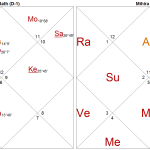 Varāhamihira Drekkāṇa - Nomenclature: from Varāhamihira Mihira Drekkana or D3-M Varāhamihira defines the horā and drekkāṇa in the opening chapter of Bṛhat Jātaka (śloka 12). We have defined...
 Jagannāth Drekkāṇa - Definition The three drekkāṇa of a sign are its trines with the first in a movable sign, second in a fixed sign and third in...
 Somanāth Drekkāṇa - D3-S Chart The construction (mapping) of the Somanāth drekkāṇa is similar to the parivṛtti drekkāṇa (just like the horā) but with a difference in that...
 D4 Introduction - Turyāṁśa Śloka 9½: स्वर्क्षादिकेन्द्रपतयस्तुर्यांशेशाः क्रियादिषु। svarkṣādikendrapatayasturyāṁśeśāḥ kriyādiṣu | sva-self; rkṣa-sign; adi-others; kendra-quadrants; pati-lord; turya-fourth, fourth state of soul; aṁśa-part, division; īśa-lord; kriyā-Aries; Translation: The turyāṁśa...
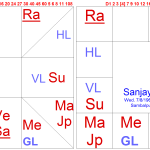 Caturthāṁśa: D4 Chart - Caturthāṁśa calculation The one-fourth (quarter) division of a rāśi measures 7°30’ and there are four such caturthāṁśa [called ‘turyāṁśa’ by Parāśara] in every sign. The...
 Caturthāṁśa Application - Warning: There are words in here which you may not understand, like argalā or ārūḍha. This will be taught in later years of this course....
 D4 Slides - D4 Chart: Caturthāṁśa When we divide the rāśi into four parts we have four divisions measuring 7°30’ each. These map into the kendra from every...
 Saptāṁśa Varga - Indian Society has come to be plagued by the great evils of female feticide and infanticide. Before consulting a doctor for sexual determination and then,...
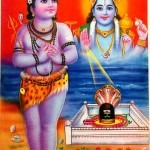 Saptāṁśa: Children - Timing of birth of each child is seen from Saptāṁśa (D7) as well as their nature, abilities, fortune and any trouble they may have. Each...
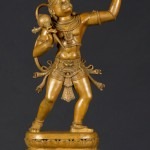 Dasāṁśa Defined - The Dasāṁśa is the one-tenth division of a sign covering 3° of arc. Dasāṁśa is reckoned from the sign itself for odd signs and from...
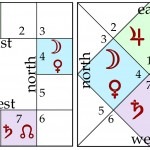 Dasāṁśa Devatā - The deities of the Dasāṁśa are the ten digpāla including Brahma (vertical downwards) and Ananta (vertical upwards) reckoned directly in odd signs and in the...
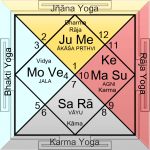 Dasāṁśa Yoga - The dasamsa should be analyzed in detail independently like the Rasi Chart. The artha (Artha: Finance, money) trikona is composed of the 2nd, 6th &...
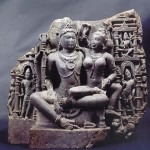 Dvādaśāṁśa Concepts - Dvādaśāṁśa mapping The first dvādaśāṁśa of every sign which extends from 0°00’- 2°30’ of every sign, is mapped into the same sign. For example, the...
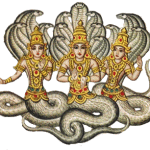 Dvādaśāṁśa: Parents - Dvādaśāṁśa devatā Gaṇeśa, Dasra (Aśvinī Kumar), Yama and Ahi (Sarpa) repeating three times, in that order are the four devatā of the dvādaśāṁśa. Devatā Dvādaśāṁśa...
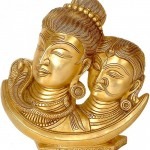 D12: Grandparents - Dvādaśāṁśa and grandparents Grandparents, both maternal and paternal are examined from the dvādaśāṁśa. The paternal grandparents are seen from the 9th (father) and 4th (mother)...
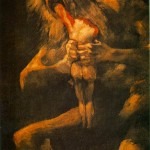 D12: Abuse - Saturn Devouring His Son by Spanish artist Francisco Goya Child abuse by parents The planets signifying childhood are the Moon (Baby 0-1 year), Mars (1-4...
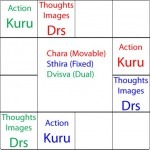 Ṣoḍaśāṁśa: D16 - Parāśara teaches that from the Ṣoḍaśāṁśa (D16) we know about happiness and sorrows besides the power of discernment, comprehension and understanding (including religious study but...
 D16: Sukha-Duḥkha - Sukha (joy, bliss) indicated by Jupiter, the giver of the supreme bliss and duḥkha (sorrow) indicated by Saturn, the god of death and disease are...
 Viṁśāṁśa: D20 - About Dharma The religiosity and spiritual leanings are seen in the Vimśāṁśa (D-20 chart). The planets in trines to the Vimśāṁśa ascendant provide the deities...
 Siddhāṁśa Slides - There are two types of siddhāṁśa (D24 charts) just are there are two types of knowledge that can be mastered – (a) apara vidyā, the...
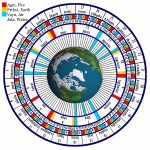 Trimśāṁśa - What is the Trimsamsa, and how to draw a Trimsamsa Chart? Trimsamsa means the one-thirtieth portion of a sign measuring one degree. Unlike other divisions,...
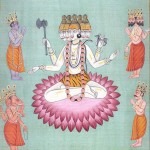 Triṁśāṁśa Study - How to study the Trimsamsa Chart? {tab=Method} Method-1 Treat this like any other chart. In spiritualism we are taught of a “SHADOW SELF” called PAPA_PURUSHA...
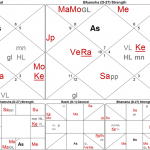 D27: Bhāṁśa - Introduction Bhāṁśa is from the word (and letter) भ (bha) referring to the bha-chakra or the zodiac composed of 27 nakṣatra. The letter भ (bha)...
 D27: Bhāṁśa Slides - This is a peculiar division as the one-twenty-seventh portion of a sign equals 1°06’40”. Now the one-twelfth portion of a nakṣatra equals the same 1°06’40”....
 D40: Khavedāṁśa - Know that the lords of catvāriṁśāṁśa [40th division previously called Khavedāṁśa], for odd signs are reckoned from Aries while for even signs they are reckoned...
 D45: Akṣavedāṁśa - Agni: Supreme light of the Holy Father as Brahma (Mars: Brahmacārya), Śiva (Sun: Ātmā Jyoti) and Viṣṇu (Jupiter: Satya Jyoti) तथाक्षवेदभागानामधिपाश्चरभे क्रियात् । स्थिरे सिंहाद्...
 D60: Ṣaṣṭiāṁśa - Topics D60 Chart; Mṛdu-Krūra ṣaṣṭiāṁśa; Birth karma indications; Blessings for Baby; Rāśi-Tūlya-Aṁśa RTA; Aṁśa-Tūlya-Rāśi ATR; Uttama Graha; Parivartana in D60 Chart We start by learn...
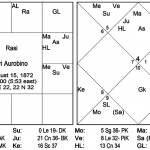 Theory of Navāṁśa - Etymologically, the word navāṁśa is composed of two words nava meaning nine and aṁśa meaning part of division. Division refers to an orderly division of...
 Navāṁśa Examination - There are various techniques for examining the Navāṁśa for various purposes – fortune, destiny, spiritual pursuits leading to mokṣa as well as spouse and relationships....
 Navāṁśa Notes - These are my personal notes made when learning navāṁśa which we share with you. The topics included in the slides are meant to give clarity...
 Navāṁśa Notes2 - These are my personal notes made when learning navāṁśa which we share with you. The topics included in the slides are meant to give clarity...
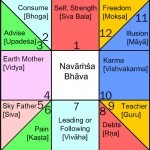 D9 Janma - Navāṁśa is a print of the karma of past life manifesting in this life. It starts right from the moment of birth, and that helps...
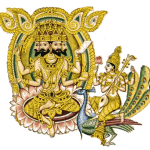 Puṣkarāṁśa - Puṣkara is the blessing of Brahma, the Creator who grants longevity. In this lesson presentation we study the puṣkarāṁśa aspect of the navāṁśa namely –...
 Bhagya-I Dharma - Dharma, represented by the bull (of Śiva) called Nandiśvara, has four legs. These legs are Dharma Leg Yuga Lagna Bhāva Tapaḥ (austerity) Kṛta Ākāśa Karma...
 Bhagya-II - We study the anitya bhāgya kāraka … just to recapitulate – anitya kāraka of any bhāva is the dispositor of the lord of that bhāva....
 Chandrāṁśa - Chandrāṁśa is the navāṁśa sign of the Moon. It is an important part of bhāgya (fortune) as fortune manifests within the human society, and society...
 Vivāha: Marriage - Vivāha is the most important part of the navāṁśa. The greatest secret of our tradition is now public knowledge – the manner in which to...
 Viṁśāṁśa Lesson-2 - Lessons The one-twentieth potion of the rāśi maps to the 8<sup>th</sup> house in the second cycle and shows the path of spiritual transformation. Each viṁśāṁśa...
 PJC-2A Navamsa WS 102 - As decided, this will be the method of doing the workshop.
 PJC-2A Navamsa WS 104 - This time we study combinations that make marriage very difficult or relationships very painful. What karma shows this and why? What is the meaning of dusthana with respect to marriage and relationships. What yogas can guarantee this suffering? What enforces moving away from home after marriage? Is is better to move away to have some happiness?? How do we see this?